
How Often Should You Groom Your Dog?
TL;DR
- Most dogs need a proper brush at home somewhere between a few times a week and daily, plus a trip to a professional groomer every four to eight weeks
- The honest answer to how often should you groom your dog always comes back to your dog's breed and coat type
- Double-coated and long-haired breeds usually need more frequent grooming than short-haired dogs
- Regular brushing between appointments keeps loose hair, matting, and skin irritation at bay
If you've ever stood in the middle of a fur-covered lounge room wondering how often should I groom my dog, you're not alone. It's one of the most common questions in dog grooming, and the honest answer is: it depends.
There's no single number that works for every dog, because grooming frequency comes down to your dog's coat type, breed, and activity level. What we can tell you is what actually shapes that answer, so you, and dog owners everywhere, can build a routine that keeps your dog's coat and skin healthy, without overcomplicating your week.
So, how often should I groom my dog?
As a starting point, most dogs need:
- Daily brushing, or close to it, for long-haired dogs and double-coated breeds, especially during shedding season
- Weekly brushing for short-haired dogs, to remove loose hair and distribute natural oils through the coat
- A professional groom every four to eight weeks, depending on coat type, to manage coat trimming, nail length, and any hard-to-reach areas
That's the general guide, but plenty of dogs sit outside these averages. A dog who's outdoors picking up grass seeds and mud will need more frequent grooming than a couch potato, and a senior dog with sensitive skin might need a gentler routine than a boisterous puppy. The best way to work out your dog's actual grooming frequency is to get to know their coat type, and keep an eye on how it behaves between grooms.
It comes down to your dog's coat type
Your dog's coat type is the single biggest factor in how often they need grooming. Broadly, dogs fall into a few coat categories, and each comes with its own grooming routine.
Short-haired dogs
Short haired dogs, like Staffies, beagles, and boxers, are the lowest-maintenance option when it comes to coat care. Their coats shed dead hair fairly efficiently on their own, and a weekly brush with a soft brush or bristle brush is usually enough to keep the coat tidy, remove loose hair, and distribute natural oils. Short haired breeds still benefit from professional grooming every couple of months, mostly for nail trims, ear checks, and a wash with a dog specific shampoo.
Long-haired dogs
Long haired breeds, like Maltese Terriers, Shih Tzus, and Afghan Hounds, need far more frequent attention. Because of their coat length, loose hair and dead hair don't fall away on their own the way they do on short haired dogs, they tend to tangle and mat instead. Daily brushing is often necessary to keep a long haired dog's coat tangle-free, particularly around the ears, armpits, and behind the legs, where matting loves to hide. Long haired dogs typically need coat trimming every four to six weeks to keep things manageable.
Double-coated breeds
Double coated dogs, like golden retrievers and rough collies, have a soft undercoat and a coarser outer coat, and they shed heavily, especially during seasonal coat blows. Double coated breeds need frequent brushing with a suitable brush, like an undercoat rake or a slicker brush, to remove loose fur and dead hair before it ends up on your couch (or matted against your dog's leg). Skipping regular brushing on double coated dogs traps moisture and shed hair against the skin, which raises the risk of skin irritation and skin infections. These breeds usually need more frequent grooming during shedding season, sometimes several times a week, to keep their skin healthy underneath all that fur.
What regular grooming actually does for your dog
Grooming isn't just about keeping your dog's coat looking tidy, grooming plays a real role in your pet's health, something many pet owners underestimate. Brushing your dog's coat regularly removes loose hair and dead hair before it can build up, mat, or trap dirt against your dog's skin. Regular brushing to remove dead hair also helps spread your dog's natural oils through the coat, supporting healthy skin, keeping coats healthy and glossy, and even encouraging healthy hair growth.
For many dogs, especially those who spend time outdoors, regular grooming is also your first line of defence against grass seeds, which can burrow into paw pads, ears, and between toes, causing painful skin issues if left unchecked. A quick check over your dog's body during a grooming session often catches these problems early.
Keeping on top of your dog's nails matters just as much as coat care. Overly long nails can change the way your dog walks and put pressure on their joints. Getting your dog's nails trimmed regularly, alongside your usual grooming routine, is one of the simplest ways to protect their comfort long-term.
Building a grooming routine at home
The good news is that most day-to-day grooming tasks are simple, and pet parents can fold them into a weekly routine without much fuss. A few basics go a long way:
- Brushing: use a brush suited to your dog's coat type, a slicker brush or undercoat rake for double coated breeds, a fine toothed comb for detangling long haired dogs, or a soft bristle brush for short haired dogs
- Nail checks: if you can hear your dog's nails clicking on hard floors, they're overdue for a trim
- Paw and ear checks: a quick look over paw pads and ears helps you catch grass seeds, irritation, or early signs of skin issues
- Gentle handling: keep sessions calm and positive, especially for nervous or older dogs, since short, frequent sessions with gentle handling build trust and prevent matting from taking hold in the first place
“The dogs who cope best with grooming are the ones whose owners keep up a bit of a routine at home. It doesn't need to be perfect, even a few minutes of gently brushing your dog a few times a week makes a real difference to how they feel about being groomed, and to how healthy their coat and skin stay in between visits.” — Barkley Park Groomer
When it's time to call in a professional groomer
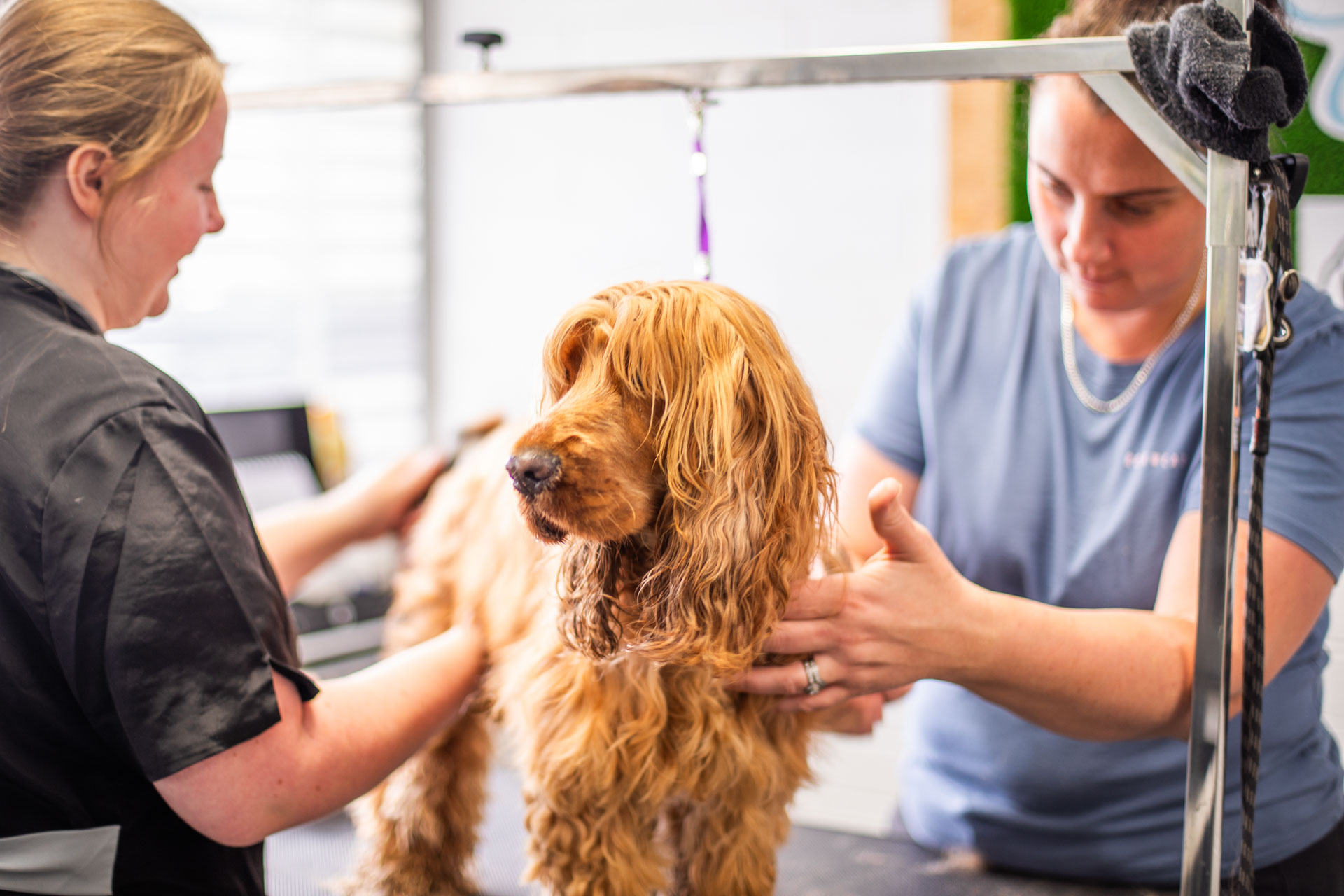
Home grooming keeps things ticking over, but every dog benefits from professional grooming services at some point in their routine. A reputable professional groomer can safely manage tasks that are harder to do at home, like coat trimming around sensitive areas, de-matting, or trimming the nails of a dog who isn't a fan of having their paws handled.
It's time to book in with a professional groomer if you notice matting that won't brush out, excess hair building up faster than you can manage, overgrown nails, or skin irritation that doesn't settle on its own. Many dogs also need more frequent grooming around shedding season, when even a well-maintained coat can get away from you fast.
At Barkley Park's grooming studio, our groomers work at your dog's pace, tailoring every groom to their breed, coat type, and temperament. Whether that's a nervous rescue who needs a slower, gentler approach, or a double coated dog due for a good de-shed, we adjust our techniques so the time spent grooming stays a positive experience, not something to dread.
Finding what works for your dog
There's no single answer to how often should you groom your dog, but understanding your dog's coat type, and building a simple routine around it, makes the whole thing far less overwhelming. A bit of regular brushing at home, paired with professional grooming every four to eight weeks, keeps your dog healthy, comfortable, and looking their best. If you're not sure where to start, our team at Barkley Park is always happy to chat through what your dog's coat actually needs.
Related posts
Is doggy daycare good for dogs?
If you've ever typed ‘is doggy daycare good for dogs?’ into a search engine, you've probably noticed that the answers fall into two camps...
Read More →
How Often Should You Groom Your Dog?
Grooming isn’t just about keeping your dog looking good — it’s about keeping them comfortable, healthy, and easy to live with. At Barkley Park, we keep things straightforward. No overcomplication, no one-size-fits-all answers — just what works for your dog.
Read More →